
Why Staffing Firms Keep Rebuilding the Same Pipeline Over and Over Again
How pipeline continuity problems—not effort or activity—keep staffing firms stuck in cycles of feast and famine

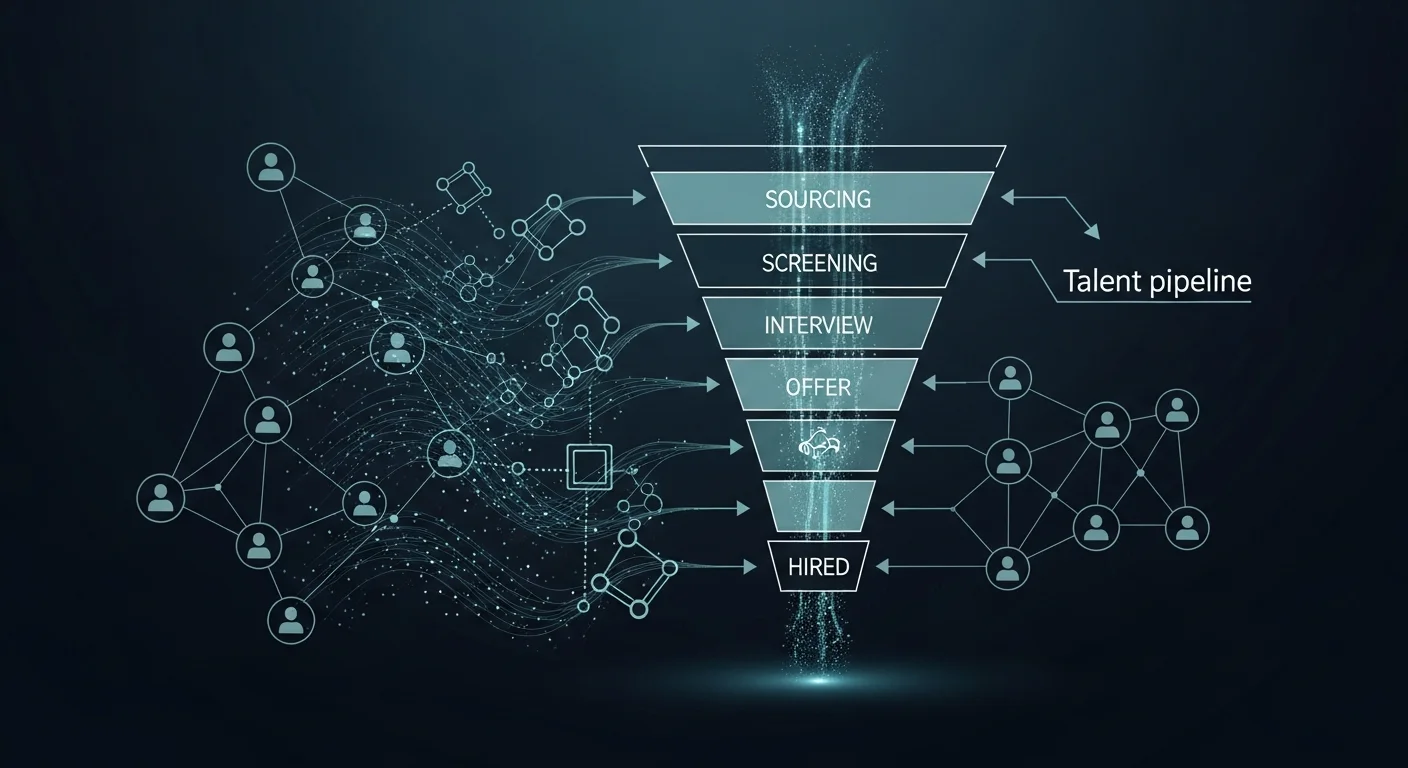
A lot of staffing firms are stuck in the same cycle.
The team works hard.
They bring in business.
They get buried filling roles, servicing clients, and managing delivery.
Then pipeline activity slows down.
A few weeks later, the funnel looks thin again.
So everyone scrambles to rebuild it.
That cycle is more common than most staffing leaders want to admit.
And in this market, it is getting more expensive.
The industry is not falling apart, but it is not exactly easy either. U.S. staffing employment showed signs of stabilization heading into 2026, while firms still operated in a cautious environment where efficiency mattered more. Bullhorn's 2025 research also found that firms using AI and automation were more likely to grow revenue and more likely to fill roles faster.
That is why this is the wrong time to run business development the old way.
This is not just a lead generation problem.
It is a pipeline continuity problem.
The Real Problem Is Not Effort
Most staffing sales teams are not lazy.
They are overloaded.
They are expected to:
- prospect
- manage accounts
- fill roles
- respond quickly to clients
- coordinate internally
- keep every relationship warm
- and somehow stay consistent with follow-up the whole time
That sounds fine in theory.
In practice, the minute a salesperson or account manager gets busy with real business, business development drops.
That is the pattern.
When req volume goes up, outreach slows down.
When delivery gets intense, touches fall off.
When the team is slammed, nobody is building the next layer of pipeline.
So firms end up with a stop-start revenue engine.
That is why the pipeline always feels like it comes in waves.
Staffing Firms Do Not Need More Random Activity
This is where a lot of firms get the diagnosis wrong.
They assume the answer is:
- hire more recruiters
- add more business development reps
- ask the team for more calls
- set more activity metrics
- push harder on outbound
But more random activity is not the same thing as better pipeline generation.
A lot of staffing firms already have enough activity.
What they do not have is steady activity.
That difference matters.
Because a business does not grow cleanly when pipeline depends on whether individual reps happen to have time that week.
It grows cleanly when outreach, follow-up, and relationship coverage continue even when the team is busy.
That is the part most staffing firms are missing.
If you have already read our earlier piece on the modern staffing tech stack, this is the next layer of the problem: having tools is one thing, but keeping pipeline moving consistently is something else.
The Biggest Leak Is Not the First Touch. It Is the Missed Second, Third, and Fourth Touch
Most firms think pipeline problems start at the top of funnel.
A lot of the time, they do not.
They start after the first touch.
The first email may go out.
The intro may happen.
The initial meeting may even be booked.
Then the team gets pulled into delivery, account issues, candidate problems, or internal coordination.
And the next touch does not happen.
That is where momentum dies.
In staffing, the issue is rarely that nobody knows how to sell. The issue is that consistent follow-up gets sacrificed the second the team gets busy.
That is why a lot of firms are not actually short on contacts.
They are short on consistent pipeline motion.
Why the Old Headcount Model Is Getting Harder to Justify
For a long time, the answer to growth in staffing was simple:
Add more people.
- More recruiters
- More sales reps
- More coordinators
- More admin support
That worked when margins were healthier, competition was lighter, and the market was more forgiving.
Today, that model is under pressure.
- Clients want faster turnaround
- Hiring demand is more uneven
- Teams are expected to do more with less
- Leadership is under more pressure to protect margin while still growing revenue
That changes the economics.
Now the question is not just, "How do we bring in more business?"
It is also, "How do we bring in more business without bloating payroll every time we want to grow?"
That is a very different question.
And it leads to a different answer.
What High-Performing Staffing Firms Are Doing Differently
The firms building more resilient pipeline right now are not just telling their teams to work harder.
They are tightening the operating model behind pipeline generation.
That means:
- steadier outreach
- more consistent follow-up
- better touch discipline
- stronger visibility into what is happening
- less dependence on human memory
- less pipeline loss when the team gets busy
This is where the market is shifting.
Bullhorn's research found that staffing firms using automation were more likely to increase revenue, and firms using AI in parts of their workflow were significantly more likely to improve fill speed. That matters because speed and consistency are not separate issues in staffing. They are connected.
The firms getting ahead are not just adding more activity.
They are removing operational drag from the pipeline process.
What This Looks Like in Real Life
A lot of staffing leaders think they have a sales discipline issue.
Sometimes they do.
But a lot of the time, what they actually have is a bandwidth issue disguised as a discipline issue.
People are not skipping follow-up because they do not care. They are skipping follow-up because the system still depends on them to do all of it manually.
That is why pipeline continuity breaks.
The team is busy doing real work, so new business generation becomes episodic instead of continuous.
The fix is not just more reminders.
The fix is building a model where:
- campaigns keep running
- touches keep happening
- follow-ups keep moving
- meetings keep getting created
- account coverage does not disappear when the team gets busy
That is how staffing firms stop rebuilding pipeline from scratch every few months.
If this pattern feels familiar, it connects directly to the broken follow-up problem that causes deals to stall long before they ever reach closing.
Where ATLAS Fits
This is where ATLAS fits differently from a generic AI or outreach tool.
ATLAS is not just there to send another email.
It is there to help staffing firms run a leaner business development and delivery model by keeping pipeline generation active and follow-up moving even when the team is buried.
That means helping firms:
- keep warm accounts engaged
- create steadier meeting flow
- support sales reps and account managers with consistent outreach
- reduce the stop-start pattern in pipeline generation
- improve touch frequency without requiring more manual effort every week
The point is not to replace the team.
The point is to stop forcing the team to be the only thing holding the pipeline together.
You can explore the full range of ATLAS capabilities or get started with ATLAS to see how it fits your current workflow.
The Bigger Risk for Staffing Firms in 2026
A lot of staffing firms are still thinking about growth the old way.
- More effort
- More activity
- More people
But the market is shifting toward something else.
The firms that win are going to be the ones that create steadier pipeline with less friction.
Not because they made a few better calls.
Because they built a better system for keeping business development active all the time.
That is the difference between:
- feast or famine pipeline and predictable pipeline generation
- reactive growth and repeatable growth
And in staffing, that difference compounds fast.
Final Thought
Most staffing firms do not have a demand problem.
They have a continuity problem.
Their team can sell.
Their team can fill roles.
Their team can build relationships.
But if pipeline generation drops every time the business gets busy, the firm keeps getting pulled back into the same cycle.
- Busy
- Thin pipeline
- Scramble
- Recover
- Repeat
That is not a lead problem.
That is an operating model problem.
And that is exactly why more staffing firms are starting to rethink how pipeline generation actually runs. Talk to us about what a steadier pipeline model could look like for your firm.