
How to Create an Effective Enterprise AI Strategy: Building a Roadmap for Success
Building a Roadmap for Success

The integration of Artificial Intelligence (AI) into enterprise operations is no longer a luxury but a necessity. Knowing how to create an effective AI strategy can unlock significant business value, drive innovation, and enhance competitive advantage. However, creating a robust AI strategy requires careful planning, clear objectives, and a comprehensive understanding of AI's potential and limitations. This article explores the essential steps and best practices for developing an effective enterprise AI strategy.
Creating Great Enterprise AI Implementation Strategies
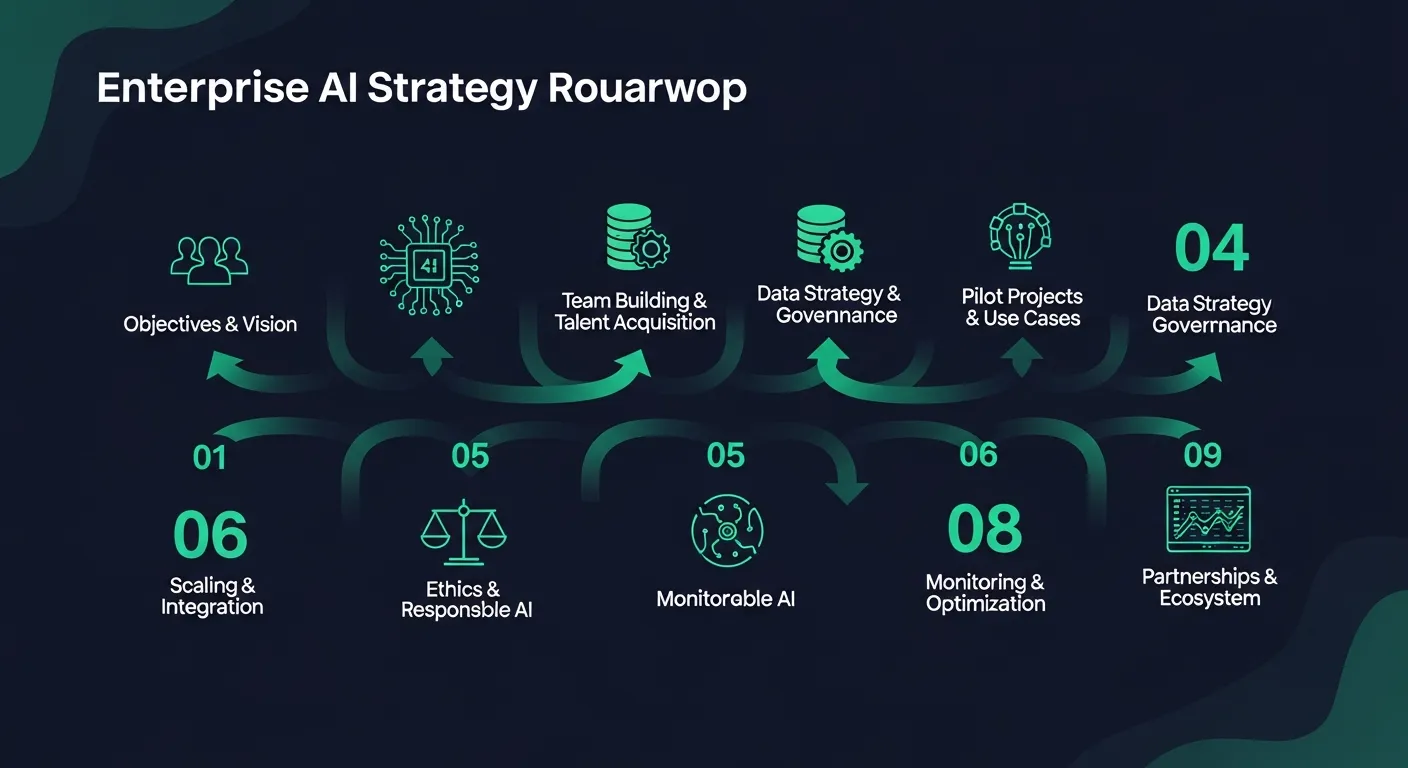
Building a successful enterprise AI strategy requires a structured approach that addresses every aspect of AI adoption. From setting clear goals to partnering with the right experts, these nine essential steps will guide you through creating a comprehensive AI implementation strategy that delivers real business results.
1. Define Clear Objectives
The foundation of any successful AI strategy begins with clearly defined objectives that align with your overall business goals. Without clear direction, AI initiatives risk becoming unfocused and failing to deliver meaningful value.
- Identify Business Goals: Determine the specific areas where AI can add the most value, such as improving customer service, streamlining operations, or driving revenue growth. Focus on objectives that directly impact your bottom line.
- Set Measurable Targets: Establish key performance indicators (KPIs) that allow you to track the success of your AI initiatives. Measurable targets ensure accountability and provide a clear framework for evaluating progress.
2. Assess Current Capabilities
Before implementing AI, it's essential to understand your organization's current technological landscape and data readiness. A thorough assessment helps identify gaps and opportunities for AI integration.
- Inventory of Data Assets: Conduct a comprehensive audit of your existing data assets, including their quality, accessibility, and relevance. High-quality data is the fuel that powers effective AI solutions.
- Technology Infrastructure: Review your current technology infrastructure to determine its readiness for AI integration. Identify any upgrades or additions needed to support AI workloads and ensure seamless deployment.
3. Build a Skilled Team
A successful AI strategy depends on having the right talent in place. Building a skilled team ensures your organization can develop, deploy, and maintain AI solutions effectively.
- Hire AI Experts: Recruit data scientists, AI engineers, and machine learning specialists who bring deep technical expertise to your organization. These professionals form the core of your AI capabilities.
- Upskill Existing Staff: Invest in training programs that help current employees develop AI-related skills. Upskilling your workforce ensures broader organizational buy-in and creates a more adaptable team.
4. Choose the Right AI Technologies
Selecting the appropriate AI technologies is critical to the success of your strategy. The right tools and platforms should align with your business needs and integrate seamlessly with existing systems.
- Evaluate AI Solutions: Research and compare different AI platforms and tools based on their capabilities, scalability, and compatibility with your existing infrastructure. Consider both open-source and commercial options.
- Pilot Projects: Start with small-scale pilot projects to test AI solutions in controlled environments before committing to full-scale deployment. Pilots help validate assumptions and reduce implementation risks.
5. Develop a Data Strategy
Data is the foundation of any AI initiative. A well-defined data strategy ensures your AI models have access to the high-quality, relevant data they need to deliver accurate and actionable insights.
- Data Collection and Management: Establish robust processes for collecting, storing, and managing data across your organization. Ensure data is accessible, well-organized, and properly documented.
- Data Governance: Implement strong data governance practices that address data quality, security, and compliance requirements. Good governance ensures your data remains reliable and trustworthy for AI applications.
6. Foster a Culture of Innovation
A culture that embraces innovation is essential for AI success. Organizations that encourage experimentation and cross-functional collaboration are better positioned to realize the full potential of AI.
- Encourage Experimentation: Create an environment where teams feel empowered to explore new ideas and test AI applications without fear of failure. Innovation thrives when employees are given the freedom to experiment.
- Cross-Functional Collaboration: Break down silos between departments and encourage collaboration across teams. AI initiatives benefit greatly from diverse perspectives and shared expertise.
7. Monitor and Measure Performance
Ongoing monitoring and measurement are essential for ensuring your AI initiatives deliver the expected results and continue to improve over time.
- Track Progress: Regularly monitor key metrics and KPIs to assess the performance of your AI solutions. Use dashboards and reporting tools to maintain visibility into AI-driven outcomes.
- Iterate and Improve: Use performance data to identify areas for improvement and refine your AI models and processes. Continuous iteration ensures your AI solutions remain effective and relevant.
8. Ensure Ethical AI Use
Ethical considerations are paramount when deploying AI in enterprise settings. Responsible AI use builds trust with stakeholders and ensures compliance with evolving regulations.
- Ethical Guidelines: Develop and enforce clear ethical guidelines for AI development and deployment. These guidelines should address issues such as bias, fairness, privacy, and the responsible use of data.
- Transparency and Accountability: Ensure that AI decision-making processes are transparent and that there are clear lines of accountability. Stakeholders should understand how AI systems reach their conclusions and who is responsible for their outcomes.
9. Partner with Experts
Partnering with AI experts and technology providers can accelerate your AI journey and help you avoid common pitfalls. External expertise complements your internal capabilities and provides valuable guidance.
- Consult with AI Specialists: Engage AI consultants who can provide strategic guidance, technical expertise, and industry best practices. Their experience can help you navigate complex AI challenges more efficiently.
- Collaborate with Technology Partners: Build relationships with technology vendors and partners who can provide the tools, platforms, and support needed to implement and scale your AI solutions effectively.
Setting Your AI Goals
Setting clear, achievable AI goals is a critical step in developing an effective enterprise AI strategy. Your goals should be directly tied to business outcomes and reflect a deep understanding of where AI can deliver the most value.
Identifying Business Problems AI Can Solve
The first step in setting AI goals is identifying the business problems that AI is best suited to address. A methodical approach ensures you focus on high-impact opportunities.
- Conduct a Thorough Assessment: Analyze your business processes to identify pain points, inefficiencies, and areas where data-driven insights could improve decision-making. Focus on problems that are well-defined and have measurable outcomes.
- Involve Stakeholders: Take a collaborative approach by involving key stakeholders from across the organization. Gather insights from different departments to understand their challenges and how AI might address them.
- Align AI Goals with Organizational Objectives: Ensure that your AI goals support your broader business strategy. AI should serve as a tool for achieving organizational objectives, not as a standalone initiative.
- Tailor AI Strategy to Specific Needs: Develop targeted applications that solve specific business problems rather than pursuing generic AI solutions. A tailored approach ensures higher relevance and impact.
Aligning AI Goals with Business Objectives
Once you've identified potential AI applications, it's essential to align your AI goals with your overall business objectives. This alignment ensures that AI investments deliver maximum strategic value.
- AI as an Enabler: Position AI as a tool that enables and enhances existing business processes rather than replacing them entirely. This approach facilitates smoother adoption and greater organizational support.
- Consider Scalability and Sustainability: Design AI solutions with scalability in mind, ensuring they can grow alongside your business. Sustainable AI implementations deliver long-term value without requiring constant overhauls.
- Develop a Long-Term Roadmap: Create a strategic roadmap that outlines how AI will evolve within your organization over time. A long-term perspective helps prioritize investments and manage expectations.
For example, if your business objective is to reduce customer churn, you might develop a predictive model that identifies at-risk customers based on behavioral patterns, enabling proactive retention strategies.
Building Your AI Team
A strong AI team is the backbone of any successful enterprise AI strategy. The right combination of technical expertise, domain knowledge, and collaborative skills ensures your AI initiatives are well-executed and deliver meaningful results.
Essential Roles in an AI Team
Building an effective AI team requires a diverse mix of roles that cover the full spectrum of AI development and deployment. Each role brings unique skills and perspectives that contribute to the overall success of your AI initiatives.
- Data Scientists: Responsible for developing machine learning models, analyzing complex datasets, and extracting actionable insights that drive business decisions.
- AI Engineers: Focus on implementing and deploying AI solutions, building the infrastructure needed to run AI models at scale, and ensuring system reliability.
- Domain Experts: Provide critical subject matter knowledge that helps shape AI solutions to address specific business challenges and ensures models are grounded in real-world context.
- Project Managers: Oversee AI projects from inception to delivery, ensuring milestones are met, resources are allocated efficiently, and stakeholders remain informed throughout the process.
- UX/UI Designers: Enhance the user experience of AI-powered applications, ensuring that AI solutions are intuitive, accessible, and deliver value to end users.
Collaboration among these diverse roles is key to building AI solutions that are technically sound, business-relevant, and user-friendly.
Skills to Look for When Hiring
When building your AI team, look for candidates who possess a combination of technical expertise, soft skills, and cultural alignment with your organization's values.
- Technical Skills: Proficiency in machine learning algorithms, programming languages like Python and R, big data technologies, and data analysis. These foundational skills are essential for developing and deploying AI solutions.
- Analytical and Problem-Solving Skills: The ability to approach complex problems methodically and develop creative solutions. Strong analytical thinking is crucial for designing effective AI models and interpreting results.
- Communication Skills: The ability to translate complex technical concepts into clear, understandable language for non-technical stakeholders. Effective communication ensures alignment across the organization.
- Soft Skills: Adaptability, emotional intelligence, and a growth mindset are essential for navigating the rapidly evolving AI landscape. Team members who embrace change and continuous learning are invaluable.
- Cultural Fit: Look for candidates who value collaboration, creativity, and a passion for innovation. A strong cultural fit ensures team cohesion and drives collective success.
Choosing the Right AI Technologies
Selecting the right AI technologies is a pivotal decision that can significantly impact the success of your enterprise AI strategy. Understanding the landscape of available technologies and evaluating them against your specific needs is essential.
Overview of AI Technologies
The AI technology landscape offers a wide range of solutions, each suited to different types of business problems. Understanding these technologies helps you make informed decisions about which ones to adopt.
- Machine Learning: Involves training models on large datasets to identify patterns and make predictions. Machine learning is widely used for applications such as demand forecasting, customer segmentation, and fraud detection.
- Robotic Process Automation (RPA): Automates repetitive, rule-based tasks by mimicking human actions within digital systems. RPA is ideal for streamlining back-office operations, data entry, and compliance processes.
- Reinforcement Learning: Uses a reward-based system where AI agents learn optimal behaviors through trial and error. This technology is particularly effective in gaming, robotics, and autonomous vehicle applications.
Factors to Consider When Choosing AI Technologies
When evaluating AI technologies, consider multiple factors to ensure the solutions you choose are well-suited to your business needs and organizational capabilities.
- Complexity of Business Problems: Match the sophistication of the AI technology to the complexity of the problems you're trying to solve. Simple automation tasks may only require RPA, while complex predictive analytics demand machine learning.
- Availability of Data: Assess whether you have sufficient, high-quality data to support the AI technologies you're considering. Data-hungry algorithms require large, well-curated datasets to perform effectively.
- Scalability: Choose technologies that can scale with your business as AI adoption grows. Scalable solutions ensure your investments remain valuable as your needs evolve.
- Integration Capabilities: Evaluate how well the AI technology integrates with your existing systems and workflows. Seamless integration reduces deployment time and minimizes disruption to operations.
- Ethical Implications: Consider the ethical implications of the AI technologies you adopt, including potential bias, privacy concerns, and societal impact. Responsible technology choices build stakeholder trust.
- Explainability: Prioritize AI technologies that offer transparency in their decision-making processes. Explainable AI helps build trust, facilitates compliance, and enables more informed business decisions.
Developing an AI Implementation Plan
A well-structured implementation plan is essential for translating your AI strategy into actionable steps. Following a systematic approach ensures smooth execution and maximizes the impact of your AI investments.
- Educate and Involve Stakeholders: Begin by educating key stakeholders about AI capabilities, benefits, and limitations. Their buy-in and support are critical for successful implementation.
- Collect and Prepare Data: Gather, clean, and organize the data needed for your AI models. Data preparation is often the most time-consuming step but is essential for achieving accurate results.
- Develop and Test AI Models: Build AI models based on your defined objectives and test them rigorously using real-world data. Iterative testing helps refine models and improve their accuracy.
- Deploy and Monitor AI Solutions: Roll out AI solutions in phases, starting with pilot deployments and scaling based on performance. Continuous monitoring ensures solutions perform as expected in production environments.
- Continuously Improve and Evolve: AI implementation is an ongoing process. Regularly review and update your AI models, processes, and strategies to keep pace with changing business needs and technological advancements.
Overcoming Common AI Implementation Challenges
AI implementation comes with its share of challenges. Anticipating and addressing these obstacles proactively can significantly improve your chances of success.
- Address Data Quality: Implement robust data governance practices to ensure the quality, consistency, and reliability of your data. Poor data quality is one of the most common reasons AI projects fail.
- Plan for Integration: Work closely with IT teams to plan seamless integration of AI solutions with existing systems. Thorough integration planning prevents technical conflicts and minimizes downtime.
- Manage Change: Communicate the benefits of AI clearly and address employee concerns proactively. Effective change management reduces resistance and fosters a positive attitude toward AI adoption.
- Start Small: Begin with small pilot projects that demonstrate tangible value before scaling to larger implementations. Quick wins build confidence and generate momentum for broader AI adoption.
- Seek Expert Guidance: Engage AI consultants and industry experts who can provide specialized knowledge and support throughout the implementation process. Expert guidance helps you avoid common pitfalls and accelerate time to value.
Build a Winning Enterprise AI Strategy
Creating an effective enterprise AI strategy is a transformative journey that requires careful planning, dedicated resources, and a commitment to continuous improvement. By following the steps outlined in this guide — from defining clear objectives and building a skilled team to choosing the right technologies and developing a robust implementation plan — you can position your organization for AI success.
Remember, AI implementation is a journey, not a destination. The most successful organizations view AI as an evolving capability that requires continuous learning, adaptation, and improvement. By fostering a culture of innovation, maintaining ethical standards, and partnering with the right experts, you can build an enterprise AI strategy that delivers lasting competitive advantage and drives sustainable business growth.