

What is Enterprise Digital Transformation? Guide 2026 | Captivix
Strategic Integration of Technology Across Organizations

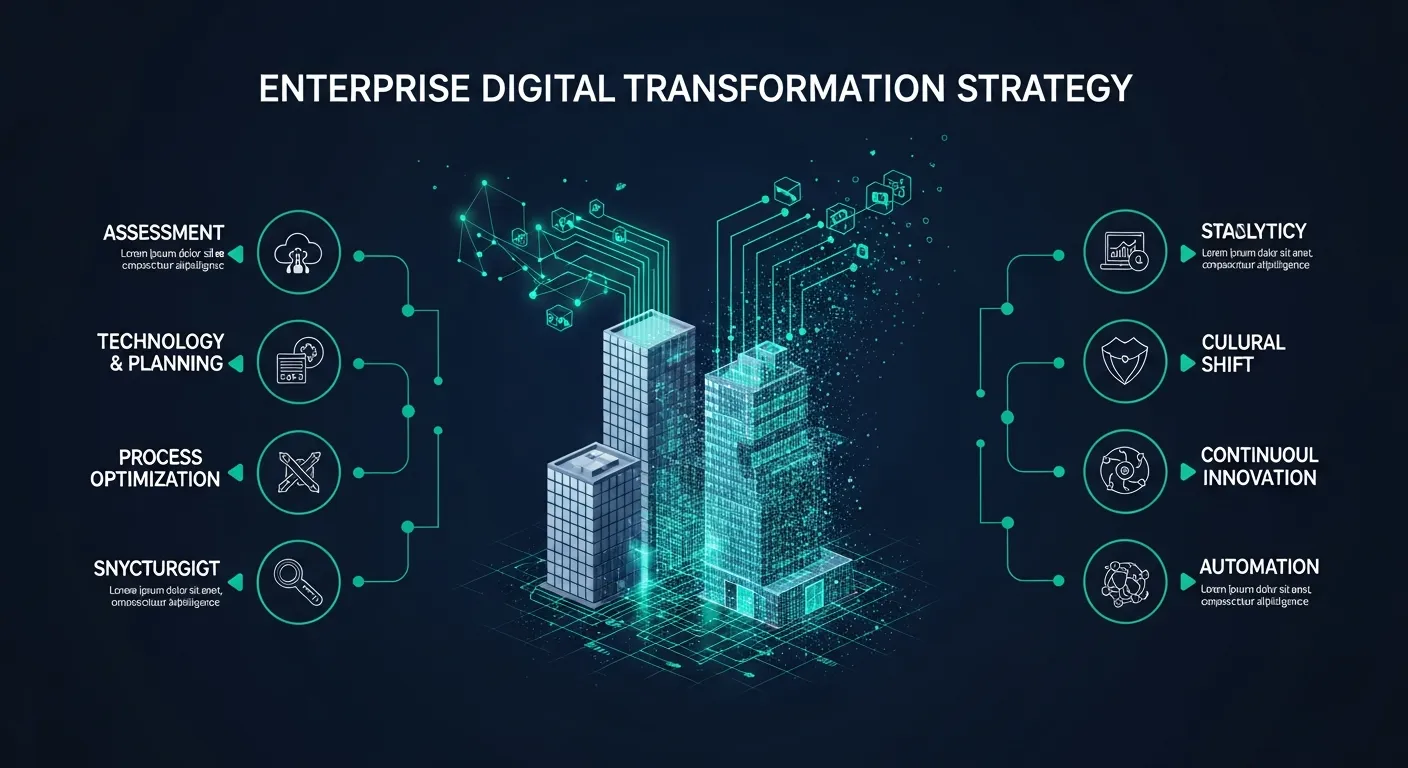
Enterprise digital transformation is a strategic procedure that integrates all departments within an organization with technology. It guarantees a better work environment, higher ROI, and positions businesses for long-term success in an increasingly digital world.
What is Enterprise Digital Transformation?
Enterprise digital transformation is the process of incorporating technology into all areas of a business to create a smoother, more efficient experience. It is a planned and deliberate process that increases efficiency and helps organizations grow sustainably.
This transformation leverages cutting-edge technologies such as artificial intelligence (AI), machine learning (ML), cloud computing, and the Internet of Things (IoT) to drive meaningful change. It has a positive impact on operations, customer experience, and business models — enabling organizations to become more agile, responsive, and innovative in an ever-evolving marketplace.
Importance of Enterprise Digital Transformation in Business
Understanding the importance of enterprise digital transformation is crucial for businesses looking to remain competitive. Here are the key areas where digital transformation makes a significant impact:
Improved customer experience
Customers are the top priority for any business, and digital transformation puts them at the center of every strategy. By analyzing customer behavior through research and data analytics, organizations can tailor their offerings to meet evolving expectations. Deploying chatbots that provide 24/7 support ensures customers always have access to assistance. Better communication channels attract more customers and build lasting relationships that drive revenue growth.
Better collaboration
Digital transformation enables streamlined operations through enhanced collaboration across departments. By establishing robust communication channels and integrated platforms, teams can work together more effectively regardless of their physical location. This cross-functional collaboration has a direct positive impact on the overall customer experience, as information flows seamlessly between teams.
Enhanced productivity
One of the most significant benefits of digital transformation is the shift from traditional manual labor to automated processes. This frees up extra time for employees to focus on the things that truly matter — strategic thinking, innovation, and creative problem-solving. When machines handle the bulk of repetitive work, it increases overall productivity across the entire organization.
Benefits of Enterprise Digital Transformation
Enterprise digital transformation delivers a wide range of benefits that can fundamentally reshape how your organization operates and competes:
- Better customer insights: Leverage data and analytics to gain deep customer insights that provide a competitive advantage in understanding market trends and customer preferences.
- Improved customer experience: Understand customer behavior patterns and deploy chatbots for 24/7 support, ensuring customers receive timely assistance whenever they need it.
- Business profitability and flexibility: Transform operations at a fundamental level through automation, enabling greater profitability and the flexibility to adapt to changing market conditions.
- Higher agility and innovation: Foster an innovative culture that encourages experiments and promotes a growth mindset, allowing your organization to respond quickly to new opportunities.
- Data-based decision-making: Implement cloud-based solutions for efficient data management, enabling leaders to make informed decisions backed by real-time analytics.
- Cost Savings: Reduce operational costs by up to 90% with digital solutions that automate manual processes and eliminate inefficiencies across the organization.
- Competitive advantage: Automate key processes and leverage better technology to stay ahead of competitors who rely on outdated systems and manual workflows.
- A top-notch global workforce: Empower employees with modern digital tools and platforms that enable them to work smarter, collaborate globally, and deliver exceptional results.
- Enhanced futureproofing: Develop a digital transformation plan that grows with your business, ensuring your organization remains relevant and competitive for years to come.
Conquering Challenges in Enterprise Digital Transformation
While the benefits of digital transformation are compelling, organizations must be prepared to navigate several key challenges along the way:
Reluctance to change
Employees are often reluctant to embrace new technologies and workflows, which can significantly slow down transformation efforts. To overcome this, organizations should establish clear communication channels, openly discuss the need for change, invest in comprehensive training programs, and provide 24/7 support to help employees adapt to new systems and processes.
Absence of a robust plan
Many transformation initiatives fail because organizations lack a clear vision or a well-defined plan. Without a strategic roadmap, efforts become fragmented and resources are wasted. Building a robust strategy that outlines clear objectives, timelines, and milestones is essential for guiding the transformation journey from start to finish.
Incorporation hardships
Incorporating modern technologies with existing legacy systems is often one of the most difficult aspects of digital transformation. The process is time-consuming and demands specialized expertise to ensure seamless integration. Organizations need a proper plan to identify potential issues early and develop solutions that minimize disruption to ongoing operations.
Data confidentiality and security issues
As organizations digitize their operations, the threat of data theft and security breaches increases significantly. To mitigate these risks, businesses must deploy comprehensive data privacy policies, implement robust encryption protocols, and conduct regular security audits to identify and address vulnerabilities before they can be exploited.
Absence of an appropriate work culture
Successful digital transformation requires a work culture that allows and encourages innovation. Organizations must avoid creating a hostile environment that stifles creativity and new ideas. Instead, they should initiate cultural change through open dialogue, regular feedback mechanisms, and fostering a growth mindset that embraces continuous learning and improvement.
Confusion about ROI
Many organizations are unsure about the returns they can expect from their digital transformation investments. When lower ROI projections can't justify the resources required, decision-makers may hesitate to move forward. It's crucial to predict and model ROI in advance, setting realistic expectations and establishing clear metrics to measure success throughout the transformation journey.
How to Build a Successful Digital Transformation Roadmap for Your Enterprise
Building a successful digital transformation roadmap requires a structured, step-by-step approach. Follow these ten essential steps to guide your enterprise through a successful transformation:
- Measure digital capability: Assess your organization's current digital maturity and identify gaps that need to be addressed.
- Determine objectives: Define clear, measurable goals that align with your overall business strategy and vision.
- Get top leadership on board: Secure executive sponsorship and commitment to ensure the transformation receives the support and resources it needs.
- Align with business plan: Ensure your digital transformation strategy complements and enhances your existing business plan rather than conflicting with it.
- Build innovative culture: Foster a culture of innovation that encourages experimentation, learning from failures, and continuous improvement.
- Determine crucial skills and resources: Identify the skills, talent, and resources required to execute your transformation plan successfully.
- Create step-by-step plan: Develop a detailed implementation plan with clear milestones, timelines, and accountability structures.
- Select ideal partner: Choose technology partners and vendors who understand your industry and can provide the expertise needed for successful implementation.
- Deploy change management plan: Implement a comprehensive change management strategy to help employees adapt to new technologies and workflows.
- Constantly track and assess progress: Establish KPIs and monitoring systems to continuously evaluate progress and make adjustments as needed.
3 Components for a Successful Enterprise Digital Transformation
Beyond having a solid roadmap, there are three critical components that determine whether your enterprise digital transformation will succeed:
Adopt a product-led mindset
Shift from traditional project-based thinking to a product-led mindset that focuses on continuous improvement and ongoing value delivery. Rather than viewing digital transformation as a one-time project with a defined end date, treat it as an evolving product that requires constant refinement, iteration, and enhancement to deliver maximum value to your organization and customers.
Set genuine expectations
Be realistic about what digital transformation can achieve and the timeline required to see meaningful results. Set measurable goals that are ambitious yet attainable, and communicate them clearly to all stakeholders. Unrealistic expectations lead to disappointment and can undermine the entire transformation effort, so transparency and honesty are essential from the outset.
Communication is key
Maintain open and transparent communication throughout the entire transformation journey. Keep all stakeholders — from executive leadership to frontline employees — informed about progress, challenges, and wins. Regular updates build trust, maintain momentum, and ensure that everyone remains aligned with the transformation vision and goals.
New Trends in Enterprise Digital Transformation
The landscape of enterprise digital transformation continues to evolve rapidly. Here are the key trends shaping the future of digital transformation:
Hyper automation
Hyper automation combines AI, machine learning, and robotic process automation (RPA) to automate complex business processes at scale. This trend goes beyond simple task automation, enabling organizations to orchestrate end-to-end workflows that span multiple systems and departments with minimal human intervention.
Data-centric decision-making
Organizations are increasingly leveraging data analytics and insights to drive strategic decisions. By placing data at the center of their decision-making processes, enterprises can identify patterns, predict trends, and make more informed choices that lead to better business outcomes and competitive advantages.
Edge computing
Edge computing involves processing data closer to its source rather than relying solely on centralized cloud infrastructure. This approach reduces latency and enables real-time decision-making, which is critical for applications such as IoT devices, autonomous systems, and time-sensitive business operations.
Digital personnel
AI-powered virtual assistants and digital workers are increasingly augmenting human capabilities in the workplace. These digital personnel can handle routine tasks, provide instant access to information, and support employees in making better decisions — freeing up human workers to focus on higher-value strategic activities.
Cybersecurity flexibility
As digital transformation expands an organization's attack surface, adaptive and flexible security measures are essential to protect against evolving threats. Modern cybersecurity approaches emphasize resilience, real-time threat detection, and the ability to rapidly respond to new attack vectors while maintaining business continuity.
Transform Your Enterprise with Strategic Digital Transformation
Enterprise digital transformation is not just about implementing new technology — it's about fundamentally changing how your organization operates and delivers value to customers, employees, and stakeholders. When applied strategically with clear objectives, strong leadership support, and a commitment to continuous improvement, digital transformation becomes a powerful catalyst for sustainable growth and long-term success.
The journey may be complex, but with the right roadmap, the right partners, and the right mindset, your enterprise can harness the full potential of digital transformation to thrive in an increasingly competitive and technology-driven world.