

Digital Transformation in Manufacturing Guide 2026
Digital Transformation in Manufacturing Guide 2026

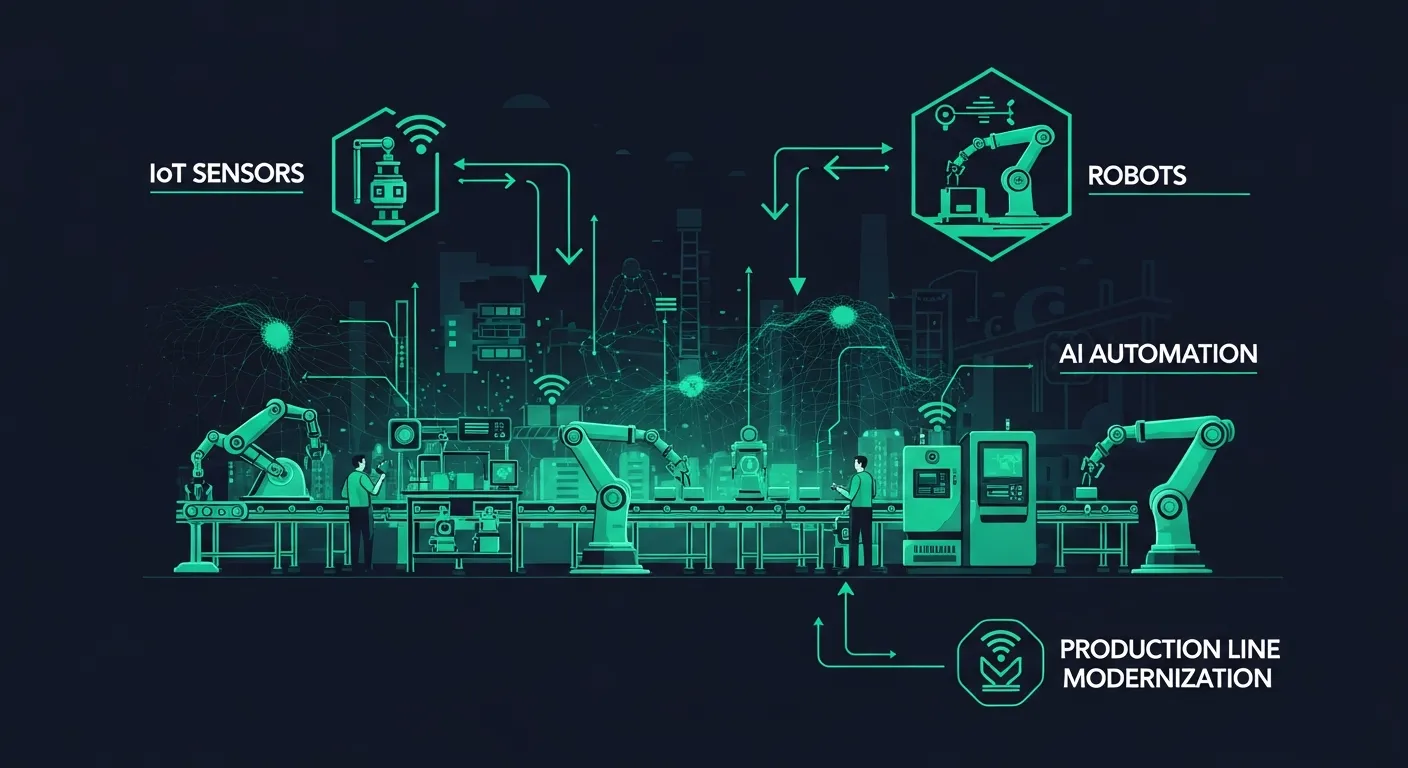
Digital transformation in manufacturing introduces technology to reduce time, effort, and costs across production processes. The shift toward digital solutions increased significantly after the pandemic, as CIOs and business leaders began incorporating technology at an unprecedented pace to stay competitive and resilient in a rapidly changing market landscape.
What is Digital Transformation in Manufacturing?
Digital transformation in manufacturing is the replacement of obsolete technology with updated tech and digital know-how. It enables manufacturers to respond to market trends faster, cater to evolving customer demands, and maintain a competitive edge in the global marketplace. By combining physical manufacturing assets with advanced data storage and analytics capabilities, organizations can achieve unprecedented levels of operational efficiency and agility.
The Benefits
Digital transformation offers numerous benefits to manufacturers who embrace modern technologies and integrate them into their operations:
- Empirical Decision-Making: Make better decisions with more data at your fingertips. CRM, ERP, and e-commerce systems provide comprehensive insights that drive informed strategic planning and execution.
- Optimize Processes: Automation, improved operations, and insightful data allow manufacturers to streamline workflows, eliminate bottlenecks, and continuously improve their production processes.
- Maximize Produce: Create better and more products with the ability to personalize offerings based on customer preferences and market demand.
- Efficient Control: Monitor operations 24/7 with advanced maintenance capabilities that prevent downtime and ensure consistent production quality.
- Reduced Costs: Automated and planned processes lead to reduced labour costs, minimized waste, and more efficient resource utilization across the organization.
- Customer-Centric: Personalize and customize orders to meet individual customer requirements, building stronger relationships and increasing customer satisfaction.
- High-Quality Products: Machines reduce human errors in production, ensuring consistent quality standards and minimizing defects throughout the manufacturing process.
- Increased Safety: Machines handle hazardous work that would otherwise put human workers at risk, creating safer work environments and reducing workplace incidents.
Why Should Manufacturers Implement Digital Transformation
There are compelling reasons why manufacturers should embrace digital transformation as a core business strategy:
- Higher Quality Products: Automated testing, sensors, and quality control systems ensure that every product meets the highest standards of excellence, reducing defects and recalls.
- More Efficient Operations: Reduce human errors with Machine Learning and AI-powered hyper-automation, streamlining workflows and maximizing productivity across all departments.
- Eco-Friendly: Achieve the least waste of resources and reduce energy consumption through intelligent monitoring and optimization, supporting sustainability goals.
- Less Costs, More Profits: IoT reduces operational costs and minimizes downtime through predictive maintenance and real-time monitoring, directly improving the bottom line.
- Customer-First Approach: Customize products per customer demands, delivering personalized experiences that build loyalty and drive repeat business.
- Flexibility: Adapt quickly to market trends with cloud-based integration and agile manufacturing processes that respond to changing conditions in real time.
Key Technologies
Several key technologies are driving the digital transformation revolution in manufacturing:
- IoT (Internet of Things): With a market size projected to reach approximately $994 billion by 2023, IoT helps manufacturers understand their business better and monitor the production floor in real time for optimal performance.
- Machine Learning: Smart algorithms enable efficient data collection and processing, allowing manufacturers to identify patterns, predict outcomes, and optimize operations automatically.
- Artificial Intelligence: AI trains machines to analyze data, predict customer demands, optimize shipping logistics, and make intelligent decisions that improve overall manufacturing efficiency.
- Robotics: Robots are the future of manufacturing. When utilized optimally, they can dramatically increase production speed, precision, and consistency while reducing labor costs.
- 3D Printing: This technology improves production capabilities by creating exact copies and replacement parts on demand, reducing lead times and enabling rapid prototyping.
- Blockchain: Enables smart supply chains that track products at every phase of production and distribution, ensuring transparency, authenticity, and accountability.
Challenges of Digital Transformation in Manufacturing
While the benefits are significant, manufacturers face several challenges when implementing digital transformation:
- Finding Suitable Technology: It can be difficult to find and invest in the right technology that aligns with your specific manufacturing needs and long-term business objectives.
- Effective Change Management: Organizations must adapt to automation and evolve their culture, processes, and mindset to embrace new ways of working.
- Training Employees: Upskilling the workforce requires careful planning, dedicated resources, and ongoing commitment to professional development programs.
- Scaling: Communicating goals to each stakeholder and ensuring alignment across the organization is essential for successful scaling of digital initiatives.
Current Trends In Digital Transformation in Manufacturing Industry
The manufacturing industry is witnessing ten significant trends that are reshaping how businesses operate and compete:
- Predictive Analytics for Decision-Making: Leveraging data-driven insights to make proactive business decisions and anticipate market changes.
- LEAN Manufacturing for Success: Combining lean principles with digital tools to eliminate waste and maximize value creation.
- Prioritizing Safety: Using technology to create safer work environments and reduce workplace accidents and incidents.
- Push Toward IoT: The IoT market is projected to reach $1.1 trillion by 2023, with 21.5 billion connected devices expected by 2025, transforming how manufacturers monitor and control operations.
- Predictive Maintenance: Using sensors and AI to predict equipment failures before they occur, minimizing unplanned downtime and maintenance costs.
- Shift from B2B to B2C: Manufacturers are increasingly engaging directly with end consumers, bypassing traditional distribution channels.
- Boosting ERP Solutions: Enhanced ERP systems are becoming central to manufacturing operations, integrating all business functions into unified platforms.
- Focus on Data: Data-driven decision-making is becoming the norm, with manufacturers investing heavily in data collection, analysis, and visualization capabilities.
- Replacing Humans with AR and VR: Augmented and virtual reality technologies are being deployed for training, maintenance, and design, enhancing human capabilities.
- Onshoring: A growing trend toward domestic production, bringing manufacturing operations back to home countries for greater control and reduced supply chain risks.
Transformation Strategy
A successful digital transformation strategy in manufacturing should incorporate five essential elements:
- Advancing Processes and Operations: Streamline and modernize existing manufacturing processes to leverage digital capabilities and improve overall efficiency.
- Deploying AI and IoT: Implement artificial intelligence and Internet of Things solutions to enable smart manufacturing, predictive maintenance, and real-time monitoring.
- Tackling Customer Data: Collect, analyze, and leverage customer data to drive personalization, improve product development, and enhance the overall customer experience.
- Atypical Thinking: Foster a culture of innovation that encourages creative problem-solving and challenges conventional manufacturing approaches.
- Training Employees: Invest in comprehensive training programs to ensure your workforce has the skills and knowledge needed to thrive in a digitally transformed environment.
Case Studies
Real-world examples demonstrate how leading manufacturers have successfully leveraged digital transformation to achieve remarkable results:
BMW
BMW, the renowned luxury car manufacturer, has been modernizing through technology with ambitious digital initiatives. Their Project i 1.0 focused on electric vehicles, while Project i 2.0 advanced automated and network driving capabilities. BMW has also implemented digital supply chain management to optimize their global operations. These digital transformation efforts contributed to a global revenue of 142.6 billion euros in 2022, representing a significant 16.39% increase from 2020.
Airbus
Airbus, a leader in the aerospace industry, has embraced digital transformation through innovative technologies. Their implementation of Digital Twins allows them to create virtual replicas of aircraft for testing and optimization. By leveraging VR and advanced technical tools for new aircraft construction and testing, Airbus has achieved remarkable efficiency gains — the Airbus330 now takes less than one-fifth of the original production time. These initiatives contributed to a revenue of €58.8 billion in 2022, marking a 13% rise from 2021.
Conclusion
Digital transformation is driving significant changes in how products are made, delivered, and maintained across the manufacturing industry. By embracing modern technologies, manufacturers can optimize processes, improve product quality, and enhance the overall customer experience. Real-time data enables data-driven decisions that lead to better outcomes and competitive advantages.
However, successful digital transformation requires substantial investments in technology, training, and infrastructure, along with fostering a culture of innovation throughout the organization. Manufacturers who adapt and embrace change while continuously innovating will be best positioned to thrive in the evolving industrial landscape of 2026 and beyond.