

11 Best Digital Transformation Trends in 2026
The 11 Most Impactful Digital Transformation Trends Shaping Business in 2026

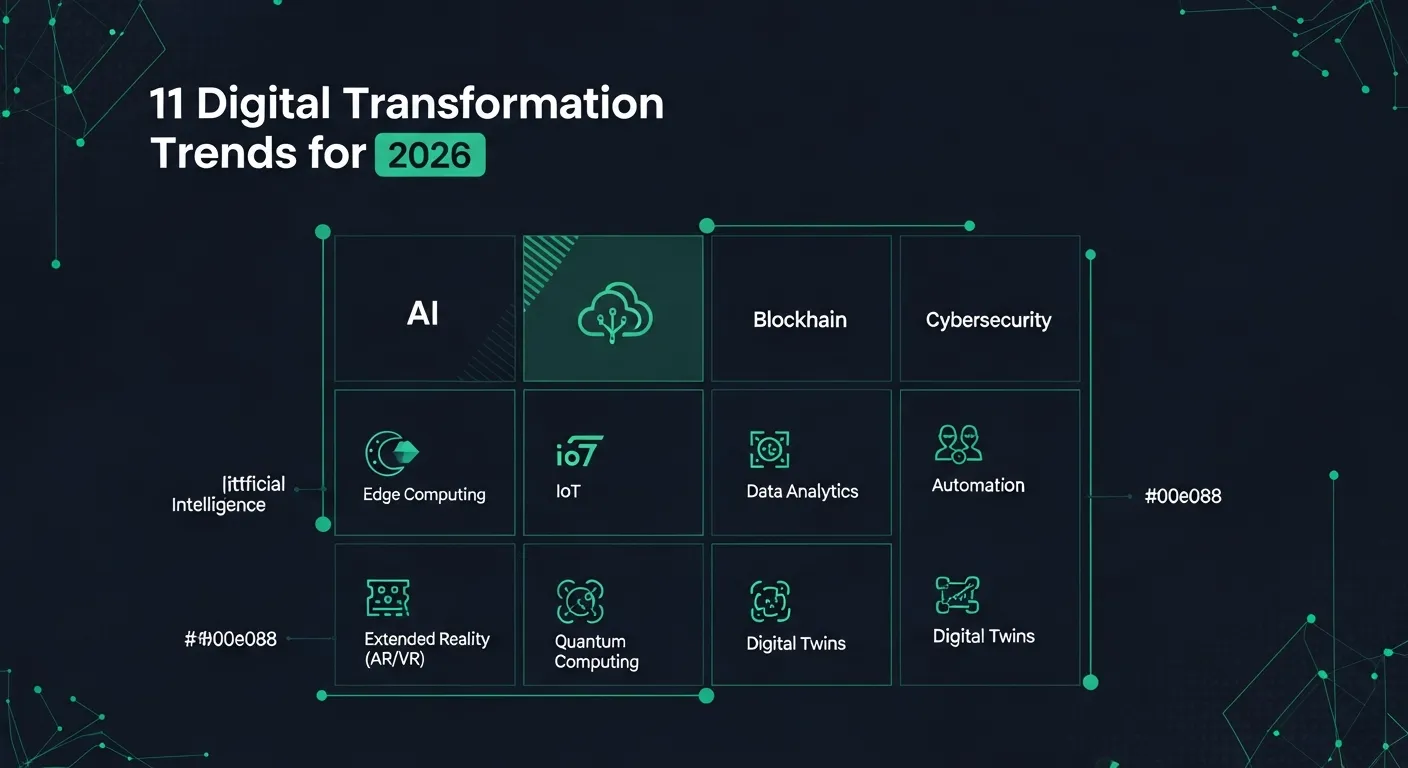
Digital transformation trends are being rapidly adopted by companies worldwide to transform their business operations and stay competitive. Key trends such as Everything as a Service (XaaS), cloud migration, AI and machine learning, and intelligent search are reshaping the way organizations function. In this article, we discuss the relevance of these trends and the crucial role they play in driving business success in 2026 and beyond.
Defining Digital Transformation
Digital transformation is the process of integrating technology into everyday business operations to fundamentally change how organizations deliver value to their customers. It creates a more efficient work environment, drives higher revenue growth, and increases customer satisfaction across all touchpoints.
At its core, digital transformation represents a shift from traditional business methods to modern approaches powered by digital tools and platforms. It prioritizes customer experience and strategic planning, enabling businesses to adapt quickly to market changes and emerging opportunities. Companies that embrace digital transformation position themselves to thrive in an increasingly competitive landscape.
Importance of Digital Transformation in Today's Business Landscape
Digital transformation is the need of the hour for businesses of all sizes. Organizations that fail to adopt digital strategies risk falling behind their competitors and losing relevance in a rapidly evolving marketplace. Here are the key benefits that make digital transformation essential:
- Improved Customer Experience: AI-powered chatbots provide 24/7 customer support, while personalized suggestions based on past purchases create tailored experiences that drive loyalty and satisfaction.
- Better Data Collection: Digital tools allow businesses to access data easily, leverage predictive analytics, and position themselves better against competitors by making data-driven decisions.
- Higher Revenue: Companies can define their expected ROI and compare it with actual results to optimize performance. Higher profits create opportunities for reinvestment in innovation and growth.
Major Digital Transformation Trends
As we move through 2026, several key digital transformation trends are shaping the future of business. Here are the 11 most impactful trends that every organization should be aware of:
1. Large-scale use of low-code platforms
Low-code platforms are enabling non-technical businesses to create and develop software applications without extensive coding knowledge. These platforms offer intuitive drag-and-drop tools that make application development accessible to a broader range of users. This democratization of software development enables rapid prototyping, faster deployment, and accelerated product development cycles, allowing businesses to bring solutions to market more quickly than ever before.
2. More migration to the cloud
Cloud migration continues to be a dominant trend as businesses seek to store data more efficiently and reduce operational costs. By outsourcing infrastructure management to cloud providers, organizations benefit from improved accessibility and scalability. Teams can access data instantly and make changes from anywhere, anytime — enabling greater flexibility and collaboration across distributed workforces.
3. AI and machine learning
Artificial intelligence and machine learning are at the forefront of digital transformation, helping businesses enhance customer satisfaction and improve decision-making through a rationalist, data-driven approach. These technologies enable organizations to train and retrain employees more effectively, strategize their future course of action, and deliver services that are available 24/7 without human intervention.
4. Intelligent search
Intelligent search integrates machine learning, semantic search, computer vision, and AI to deliver highly customized search results within enterprise environments. Employees spend an average of 1.8 hours daily — approximately 9.3 hours per week — just searching for information. Intelligent search solutions dramatically reduce this wasted time by surfacing the right information at the right moment, boosting productivity across the organization.
5. Automation
Automation addresses the challenge of repetitive tasks by handling them efficiently, allowing employees to focus on more important and strategic work. It significantly reduces human errors and improves consistency across business processes. With 80% of business leaders accelerating their automation initiatives, this trend is rapidly becoming a cornerstone of digital transformation — enhancing overall performance and customer experience.
6. Higher investment in Blockchain
Blockchain technology is finding applications across healthcare, finance, and supply chain management, enabling smarter business contracts and more transparent transactions. By creating a safer environment for sensitive information, blockchain provides immutable records and decentralized verification that reduce fraud and increase trust between business partners.
7. Virtual business collaboration
Driven initially by the pandemic, virtual business collaboration has become a permanent fixture in the modern workplace. Companies are investing heavily in virtual collaboration solutions to maintain productivity and team cohesion across distributed workforces. The usage of digital collaboration tools has increased rapidly, transforming how teams communicate, share knowledge, and work together on projects.
8. Customer data platforms (CDP)
Customer data platforms integrate software systems to create a unified, customer-centric experience. CDPs enhance customer satisfaction by providing a 360-degree view of each customer, helping businesses spot future opportunities and anticipate needs. By consolidating data from multiple sources into unified storage, organizations can better understand customer behavior and deliver personalized experiences at scale.
9. Everything as a Service (XaaS)
Everything as a Service (XaaS) represents the evolution of the traditional SaaS model, offering services and software on demand across virtually every business function. From infrastructure to data storage, businesses can access comprehensive solutions from a single provider — much like the Amazon model of delivering everything under one roof. The monthly subscription model makes enterprise-grade tools accessible to businesses of all sizes, reducing upfront costs and increasing flexibility.
10. Cybersecurity
As digital transformation accelerates, so does the threat of cyberattacks. Organizations face growing risks of data theft, data loss, and hacking attempts that can disrupt operations and damage reputation. Microsoft's "zero trust approach" has emerged as a leading framework for addressing these challenges. A potent cybersecurity strategy includes robust alert systems, continuous monitoring, and regular evaluation of data security practices to protect sensitive business and customer information.
11. Hybrid Workforce Model
The hybrid workforce model, combining remote and on-site work, has become the preferred arrangement for modern businesses. Research indicates that 54% of employees prefer a hybrid work setup, reflecting the post-COVID-19 shift in workplace expectations. This model enables companies to get the best out of their employees by offering the comfort and flexibility of working from home while maintaining the collaborative benefits of in-person interaction.
Embrace Digital Transformation for Future Success
The 11 key digital transformation trends outlined in this article — from large-scale adoption of low-code platforms to enhanced cybersecurity measures — are fundamentally reshaping how businesses operate in 2026. Each trend represents an opportunity for organizations to innovate, improve efficiency, and deliver greater value to their customers.
Understanding and adopting these trends is essential for any business that wants to remain competitive and achieve lasting success in an increasingly digital world. The companies that embrace digital transformation today will be the industry leaders of tomorrow.