
The Steps in Creating a Blueprint for AI Success: Ultimate Tutorial for Businesses
Ultimate Tutorial for Businesses

Artificial Intelligence (AI) has become one of the most transformative technologies of our time. It is revolutionizing industries, improving efficiency, and enhancing decision-making processes. However, implementing AI successfully requires careful planning and strategic thinking.
4 Steps to Create an AI Success Blueprint
AI involves creating intelligent machines that simulate human intelligence. Technologies such as machine learning, natural language processing (NLP), and computer vision enable systems to analyze data, learn from patterns, and make informed decisions. Understanding these core concepts is essential before embarking on your AI journey.
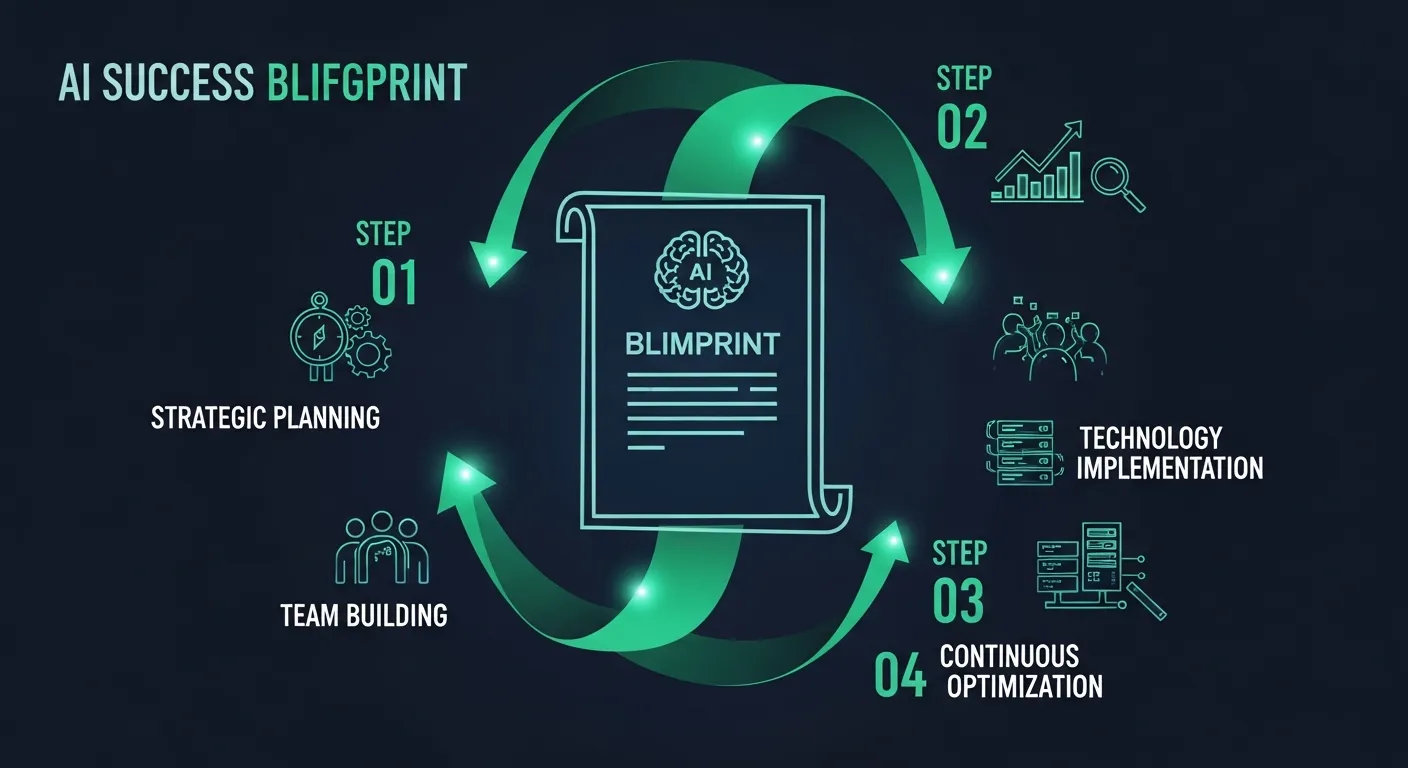
Creating a successful AI blueprint involves four critical steps: Setting the Stage for AI Implementation, Developing a Strategic AI Plan, Building Your AI Team, and Implementing Your AI Blueprint. Each step builds upon the previous one, forming a comprehensive framework that guides your organization toward AI success.
Step 1: Set the Stage for AI Implementation
Understanding the multifaceted nature of AI goals is essential for any organization looking to leverage this technology. Whether your aim is to streamline processes, revolutionize customer service, or transform decision-making, having meticulously defined goals is the foundation of success. These goals must align with your broader organizational objectives to ensure maximum impact and return on investment.
Identifying Your AI Goals
Every successful AI initiative begins with a clearly defined goal. Whether you aim to automate repetitive processes, improve customer service experiences, or enhance data-driven decision-making, it is crucial to identify the areas where AI can have the biggest impact on your organization.
- Define Clear Objectives: Establish specific, measurable goals for your AI initiatives that align with your organization's strategic vision. A visionary outlook propels your organization towards becoming a transformative force in your industry.
- Identify High-Impact Areas: Analyze your operations to pinpoint processes that would benefit most from AI automation and intelligence. Focus on areas where AI can deliver the greatest value.
- Adopt a Structured Approach: Take a structured and purpose-driven approach to AI goal-setting. This ensures every initiative has clear direction and measurable outcomes that contribute to your overall business strategy.
Assessing Your Organization's AI Readiness
Before diving into AI implementation, it is critical to assess your organization's readiness. This includes evaluating your technological infrastructure, the skills of your personnel, and whether your organizational culture embraces innovation and change.
- Evaluate Data Infrastructure: Do you have the necessary data infrastructure to support AI initiatives? Assess your data collection, storage, and processing capabilities to determine readiness.
- Assess Talent and Skills: Do your employees have the right skills to work with AI systems? Identify skill gaps early and plan for training or hiring to fill them.
- Gauge Leadership Commitment: Are your leaders committed to driving AI adoption? Leadership buy-in is essential for securing resources and fostering an innovation-friendly culture.
- Conduct a Holistic Evaluation: Perform a comprehensive evaluation of your tech prowess, talent pool, and leadership vision. This helps unearth hidden potential, mitigate risks, and fortify the foundations for successful AI adoption.
Step 2: Develop a Strategic AI Plan
With your goals in mind and a clear understanding of your organization's readiness, the next step is to develop a strategic AI plan. This involves choosing the right technologies and aligning them with your business objectives. Start by analyzing your current technological landscape, including existing systems, AI framework potential, and IT capabilities. Identify integration points and gaps that need to be addressed.
Choosing the Right AI Technologies
The AI technology landscape is vast and can be overwhelming. Making the right choices is critical for the success of your AI initiatives and the long-term growth of your organization.
- Evaluate Tools and Platforms: Assess AI tools and platforms based on their capabilities, compatibility with your existing systems, and ease of implementation. Consider factors like scalability, data privacy features, and customer support.
- Focus on Value Addition: Avoid adopting AI for the sake of it. Every technology you choose should add tangible value to your operations and contribute to achieving your business goals.
- Consider Long-Term Implications: Choose solutions that can adapt and grow with your organization. Scalability and flexibility are key factors in ensuring your AI investments remain relevant over time.
- Collaborate with Experts: Partner with AI consulting experts who can provide guidance on technology selection, ensuring you make informed decisions that align with industry best practices.
Aligning AI with Business Objectives
Successful AI implementation goes beyond technology — it requires a deep understanding of your business objectives. AI should be designed to address specific challenges and pain points within your organization.
- Engage Stakeholders: Collaborate with stakeholders across departments to understand their needs and ensure AI solutions integrate seamlessly into existing processes and workflows.
- Establish KPIs: Define clear metrics and key performance indicators aligned with your business goals. These KPIs will help you track and evaluate the performance of your AI initiatives.
- Adopt a Data-Driven Approach: Use data to continuously monitor, evaluate, and improve your AI strategies. A data-driven approach ensures your AI initiatives evolve with changing business needs and deliver continuous improvement.
Step 3: Build Your AI Team
Your AI initiative is only as good as the team behind it. Building a successful AI team is not just about filling positions — it's about creating a cohesive unit where members excel individually and collaborate effectively to drive innovation and results.
Essential Roles in an AI Team
A well-rounded AI team requires diverse expertise spanning data science, engineering, development, and domain knowledge. Each role plays a critical part in the success of your AI initiatives.
- Data Scientists: Analyze complex data sets and derive actionable insights that inform AI strategy and model development.
- Machine Learning Engineers: Build, train, and deploy machine learning models that power your AI solutions.
- Software Developers: Ensure seamless integration of AI systems with your existing technology infrastructure and applications.
- Domain Experts: Provide industry-specific knowledge that ensures AI solutions are relevant and effective within your business context.
- Project Managers: Oversee strategy and execution, ensuring projects stay on track, within budget, and aligned with organizational goals.
Skills Required for AI Success
Beyond specific roles, your AI team needs a diverse set of skills that combine technical expertise with soft skills to drive successful outcomes.
- Technical Proficiency: Strong foundations in statistics and mathematics, along with programming skills in languages like Python or R, are essential for building and maintaining AI systems.
- Domain Expertise: Deep understanding of your industry and business processes ensures AI solutions address real-world challenges effectively.
- Collaboration and Critical Thinking: The ability to work together, think critically, and solve complex problems is vital for navigating the challenges of AI implementation.
- Communication Skills: Effective communication with non-technical stakeholders ensures AI initiatives are understood, supported, and aligned with business goals across the organization.
- Adaptability: A willingness to learn and stay updated on the latest AI trends and technologies ensures your team remains at the forefront of innovation.
Step 4: Implement Your AI Blueprint
With your team in place and your blueprint ready, it's time to move into the implementation phase. Begin by conducting a comprehensive review of your current infrastructure. Identify integration points and customization areas to ensure a preparatory phase that sets the stage for seamless implementation.
Overcoming Common AI Implementation Challenges
AI implementation comes with its share of challenges, including data quality and availability issues, privacy concerns, and resistance to change. The key is to anticipate these challenges and develop strategies to address them proactively.
- Data Quality and Augmentation: Invest in data cleansing and augmentation processes to ensure your AI models are trained on high-quality, reliable data that produces accurate results.
- Security and Privacy: Implement robust security measures to protect sensitive data and ensure compliance with data privacy regulations throughout the AI lifecycle.
- Change Management: Address resistance to change through comprehensive change management strategies that include open communication, adequate training, and clear demonstrations of AI value.
- Foster Collaboration: Build a culture of collaboration and knowledge-sharing that encourages teams to embrace AI tools and share insights for continuous improvement.
Ensuring Smooth AI Integration
Ensuring a smooth integration requires thorough testing, continuous monitoring, and iterative improvement. This phase is critical for validating that your AI solutions deliver the expected results.
- Test and Validate: Thoroughly test and validate AI solutions before full deployment. Pilot programs and phased rollouts help identify issues early and minimize risk.
- Monitor Performance: Continuously monitor AI model performance and fine-tune as needed. Regular performance reviews ensure your AI systems maintain accuracy and relevance over time.
- Gather Feedback and Iterate: Continuously gather feedback from users and stakeholders. Use this feedback to iterate on your AI solutions, improving functionality and user experience.
- Establish Metrics: Define KPIs and metrics to regularly review AI performance against business objectives. This data-driven approach helps demonstrate the value of your AI initiatives and guides future improvements.
Craft a Robust AI Blueprint for Ultimate Success
The potential benefits of AI are immense — from improved efficiency and productivity to enhanced decision-making and groundbreaking innovation. By following the steps outlined in this guide, your organization can navigate the complexities of AI implementation with confidence and clarity. A well-crafted AI blueprint serves as your roadmap, guiding every decision and ensuring each initiative contributes to your broader business objectives. Embrace AI today and position your business for a future of transformative success.