

ERP is complex yet powerful software that has become the heart of modern businesses. The real complexity lies in doing the right ERP selection — one that truly understands your business needs without compromise. If you're going through your first-time ERP selection, establishing the right criteria for screening vendors is essential. This guide breaks down the whole process into simple milestones so you can make a confident, informed decision.
What is an ERP?
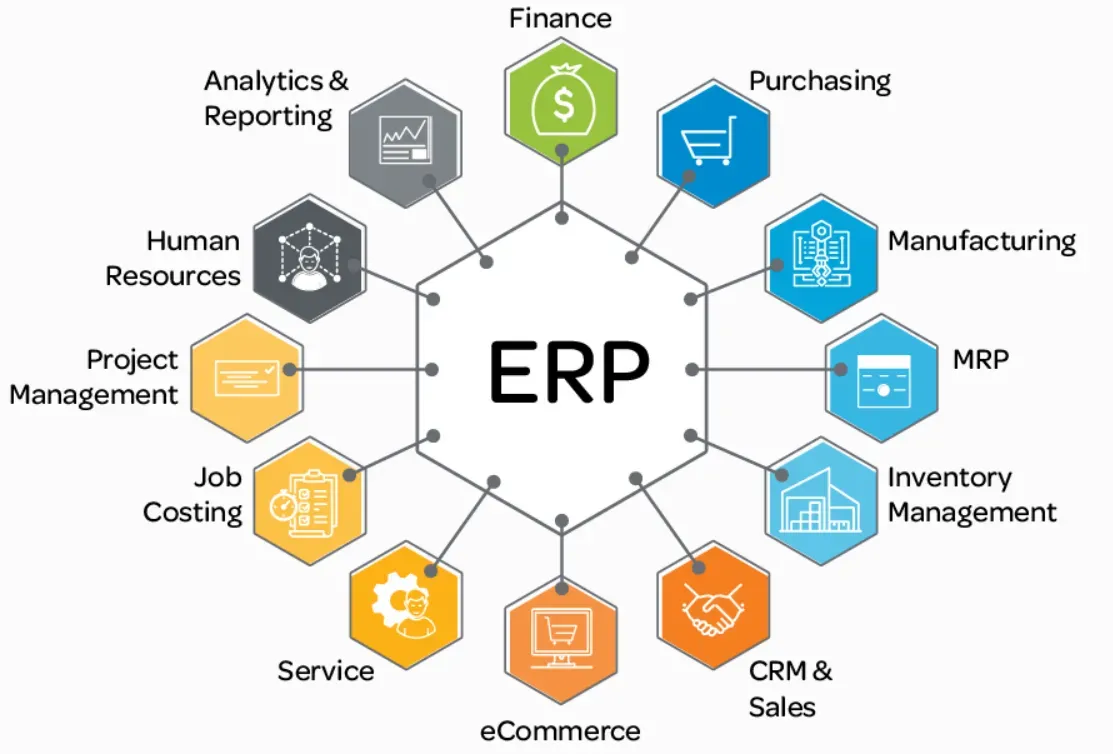
ERP stands for Enterprise Resource Planning — a sophisticated business management software designed to manage and upkeep all your business processes within a single, unified system. At its core, ERP is based on accounting and business operations, bringing together departments like finance, supply chain, human resources, and customer relations under one roof. It has become the leading solution for enterprises looking to grow and sustain a competitive edge in today's fast-paced market.
What is the ERP selection process?
The ERP selection process involves several critical steps that lay the foundation for choosing the right vendor. Here's a breakdown of the key stages:
- Collect Information: Gather feedback from the users who will actually use the software. Their input is invaluable in understanding day-to-day requirements and pain points.
- Cost Estimation: Provide your company information and the reason for ERP implementation. This helps vendors tailor their proposals to your specific needs and budget.
- Create Formal Report (BRD): Get your Business Requirements Document ready in a systematic, easy-to-understand language that clearly communicates your needs to potential vendors.
- Avoid Typical BRD Format: Online templates are often lengthy and difficult to read. Instead, create a concise document that highlights your key requirements without unnecessary complexity.
- Confidentiality Agreement: Share critical and sensitive information with vendors for customization purposes, but only after proper confidentiality agreements are in place to protect your business data.
- Vendor Screening: Identify the features to look for in an ERP vendor and use them to shortlist candidates that best match your business requirements.
Vendor Screening Categories
ERP vendors can be classified into four distinct categories based on the scope and scale of their offerings. Understanding these categories helps you narrow down which type of vendor is the best fit for your organization:
- Category 1: ERP solutions that cover entire business processes including HR, Accounts, Inventory, and CRM. These are enterprise-grade systems designed for large organizations with complex needs. Examples include Microsoft Dynamics 365 Finance, Oracle Cloud, and Infor M3.
- Category 2: ERP systems that handle large parts of the business but typically don't include HR modules. These are well-suited for mid-sized organizations that need robust functionality without full-suite complexity. Examples include Microsoft Dynamics 365 Business Central and Oracle Cloud.
- Category 3: Less powerful than Category 2 but still capable of running major business components. These solutions strike a balance between functionality and affordability. Examples include SAP Business One and Sage 200.
- Category 4: Low-cost ERP solutions that target small businesses and work for a particular area of operations. These are ideal for companies with focused needs and limited budgets. Examples include QuickBooks and MYOB.
Best ERP Selection Criteria
When evaluating ERP vendors, there are six key criteria you should consider to make the best possible decision for your business:
- Ease of Using the Application and Functionality: Evaluate the key sections of the software and check for user-friendliness. The ERP should be intuitive enough for your team to adopt without excessive training or resistance.
- Ease of Technical Integration: Evaluate the vendor's APIs, technology platform, and data center robustness. The ERP must integrate smoothly with your existing systems and infrastructure.
- Pricing: Don't focus too much on pricing early in the evaluation process. At the initial stage, pricing evaluation simply helps you identify what's too expensive and eliminates options that are clearly outside your budget.
- Software Vendor Health: Judge vendors based on market reviews, customer base, business scale, and revenues. A healthy, stable vendor is more likely to provide long-term support and continuous product improvement.
- Implementation Considerations: Consider timing, available support, and the vendor's ERP implementation plan. A well-structured implementation approach minimizes disruptions and accelerates time to value.
- Follow Your Instincts: After evaluating all the technical and business criteria, trust your subconscious mind to help make the right decision. Your overall impression of a vendor during demos and interactions can reveal important insights that data alone cannot capture.
Co-ordinate with your Implementation partner
Never forget to include and coordinate with your implementation partner throughout the entire ERP selection process. Your implementation partner is the team that will handle the software configuration and bring the system live for your organization. It is critical to determine your implementation partner before starting the vendor selection process — this is one of the most vital steps that many clients unfortunately miss.
Your implementation partner brings hands-on technical expertise and can evaluate vendor capabilities from a practical standpoint. They understand the nuances of deployment, data migration, and system customization, making their input during vendor evaluation invaluable. By involving them early, you ensure that the selected ERP system can be properly configured to meet your business needs and that the transition to the new system is as smooth as possible.
Assign a Dedicated Project Manager
After finalizing your ERP vendor, there's a significant contract to sign and a complex implementation journey ahead. Many small and medium-sized businesses lack a dedicated project manager for ERP implementations, but having one is highly beneficial. A project manager with prior ERP implementation experience can make a substantial difference in the success of your project.
Your implementation team should ideally be experienced across different vendors and platforms. The project manager's role encompasses tracking issues, managing the budget, and ensuring the implementation plan is executed on schedule. Without a dedicated PM, critical tasks can fall through the cracks, leading to delays, cost overruns, and a suboptimal implementation outcome.
Estimate Software Total Cost
Once the vendor provides a list of SKUs (Stock Keeping Units) for their software and services, it's essential to create a detailed estimate form. Mention every item carefully — from licensing fees and implementation costs to training, support, and any add-on modules. Leave nothing to assumption.
Understanding the total contract tenure is equally important. For example, a 1-year contract means the vendor can raise the price at renewal, potentially impacting your long-term budget. Consider negotiating multi-year contracts for better pricing stability, and always factor in the total cost of ownership including maintenance, upgrades, and potential customization expenses over the life of the system.
Negotiate wherever possible
A key principle in ERP procurement is to buy only what you're using now or will use in the coming weeks. If the software has different modules and you don't need all of them at once, use this as an opportunity to negotiate discounts on the complete package. Vendors are often willing to offer better pricing when they see commitment to their full suite of solutions.
Keep in mind that final negotiation can be a tiring and long process. Be patient and thorough — every percentage point saved on a large ERP contract translates to significant cost savings over the lifetime of the system. Don't rush the negotiation phase, and make sure you have a clear understanding of all terms and conditions before signing.
Conclusion
In this guide, we've covered the complete ERP selection process — from understanding what ERP is and how the selection process works, to vendor screening categories, selection criteria, the importance of implementation partners, assigning a dedicated project manager, estimating total costs, and negotiation tips. Each step plays a critical role in ensuring you choose the right ERP vendor for your organization.
By following these guidelines, you can navigate the complex ERP selection landscape with confidence and make a decision that aligns with your business goals. Remember, the right ERP system is not just a software purchase — it's a strategic investment in your company's future growth and operational excellence.

Divyank Arya
Content strategist and ERP specialist at Captivix, helping businesses navigate digital transformation with actionable insights and proven methodologies.